 Computer Programming
 Web Programming
 Computer Science
 Computer Network
 Computer Database
 Computer Architecture
 Computer Security
 Operating Systems
 Office Applications
 Computer Graphics
 Other IT Topics
Free Computer Programming Tutorials & Courses in PDF
Computer Programming (C/C++, Java, C#...) — every PDF on this page is free to download, with no account required.
Filters & sort 144 PDFs
Think Python: Master Programming Concepts Effectively
Learn Python programming with this free PDF. Covers variables, functions, data structures, and debugging. Perfect for aspiring developers.
Open
Data Structures and Programming Techniques
Practical guide to data structures, algorithms, memory management, debugging, and clean coding. Includes examples and exercises to strengthen coding skills.
Open
Hands-on Python Tutorial for Web Development
Learn practical Python web development with hands-on CGI and HTML form techniques. Build interactive pages, handle user input, and deploy server-side scripts.
Open
Python Tutorial: Learn Core Python Programming Skills
Hands-on Python guide with examples and exercises covering syntax, data structures, control flow, functions, modules, file I/O and exception handling.
Open
A Practical Introduction to Python Programming
Explore Python functions, local variables, and object-oriented programming concepts. Perfect for beginners and experienced developers alike.
Open
A Short Introduction to Computer Programming Using Python
Concise Python intro for beginners and MSc applicants: learn core syntax, variables, control flow, I/O, and exercises to build practical programming skills.
Open
C Notes for Professionals book — C Programming Guide
Download free C Notes for Professionals PDF. Learn array management, memory allocation, string handling, and debugging techniques. Perfect for developers.
Open
Learning Regular Expressions: Practical Patterns & Validation
Discover the essentials of regular expressions, including character classes, password validation, and more. Perfect for beginners and experts alike!
Open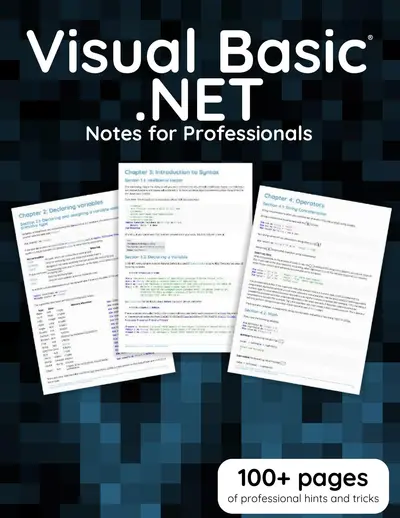
Visual Basic .NET Notes for Professionals book
Explore essential Visual Basic .NET concepts, from console input to class creation. A must-read for aspiring developers and professionals.
Open
Learning Swift Language — Comprehensive Guide
Master Swift programming with this comprehensive PDF guide! Learn syntax, AES encryption, algorithms, and iOS development. Download now!
Open
Learning F#: Complete Guide to Functional Programming
Download free Learning F# PDF. Learn WPF integration, event-driven programming, functional design patterns, and building applications. Perfect for beginners.
Open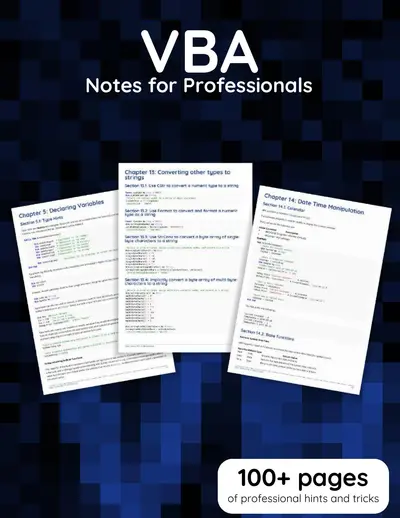
VBA Notes for Professionals Book
Download free VBA Notes for Professionals PDF. Learn variable declaration, string comparisons, debugging techniques, and module access. Perfect for beginners.
Open
Swift Notes for Professionals book
Download free Swift Notes for Professionals PDF. Learn memory management, method swizzling, structs, and best practices. Perfect for aspiring developers.
Open
How To Code in Python 3 — Beginner's Guide
Practical Python 3 guide for beginners: learn syntax, data types, control flow, functions, and OOP. Build scripts for automation and IT tasks.
Open
Spring Framework Notes for Professionals book
Explore essential Spring Framework concepts, from dependency injection to bean management. A must-read for developers at all levels.
Open
Ruby Notes for Professionals Book — Beginner Guide
Download free Ruby Notes for Professionals PDF. Learn core concepts, object-oriented programming, regular expressions, and best practices.
Open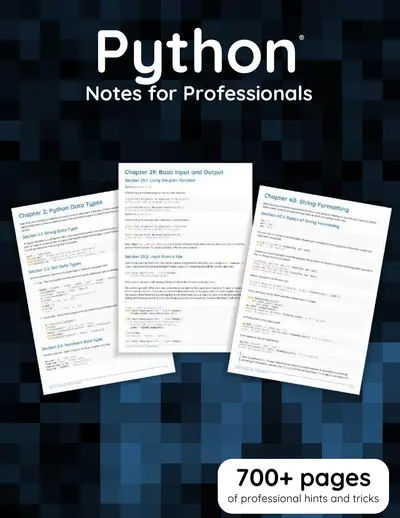
Python Notes for Professionals book
Concise Python reference with examples, exercises, and best practices for beginners and working developers. Learn idiomatic code, OOP, testing, and practical scripts.
Open
Pyforms (Python) GUI Documentation
Discover how to create and style user interfaces using PyForms and Qt. Comprehensive guide for developers looking to enhance their applications.
Open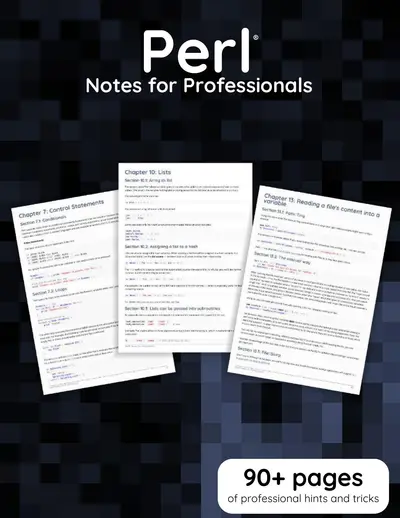
Perl Notes for Professionals: Complete Beginner's Guide
Download free Perl Notes for Professionals PDF. Learn comments, memory optimization, debugging techniques, and GUI applications. Perfect for beginners.
Open
Python for Android Documentation: Guide for Developers
Download free Python for Android Documentation PDF. Learn building APKs, managing dependencies, customizing apps, and using Kivy. Perfect for developers.
OpenAbout Computer Programming PDFs
Computer Programming includes fundamental concepts, algorithms, and techniques for writing software across various programming languages and paradigms.
We all rely heavily on various software products that programmers meticulously develop in the modern world. What is computer programming, though?
In this tutorial, I will define programming and provide examples of the various types of programmers. I will also provide a list of courses you can take to begin your coding education.
What is computer programming?
Programming is a computer program consisting of executable code that performs specific tasks on a computer. Programmers have written this code.
Programming is the act of providing machines with a set of instructions describing how a program should be executed. Programmers will spend their careers learning different programming languages and tools to help them make good computer programs.
Programmers will write source code using a code editor or integrated development environment (IDE). This is a compilation of code written in a programming language that other programmers can read.
In order for computers to read and run a program, the source code must be converted into machine language.
Compiling is the process of converting source code into machine language.
C and C++ are examples of compiled programming languages.
Other languages exist that do not employ compilers. These languages will instead utilize an interpreter to read and execute the code.
JavaScript and PHP would be examples of interpretive programming languages.
After the code has been executed, the computer program can then run.
Computer programs include word processors, database management systems, video games, and websites.
These computer programs let us use phones, websites, and computers, as well as other software devices and services.
A Brief History of Programming
Many historians believe that in the mid-19th century, Ada Lovelace wrote the first computer program and had it published. She was a mathematician who translated the Analytical Engine writings of Luigi Federico Menabrea.
This translation included Ada's detailed notes and a way to figure out Bernoulli numbers for the Analytical Engine.
Alonzo Church's math work and the Turing machine created the first computer codes.
The development of the earliest programming languages followed the creation of computers in the 1920s. Over the next 100 years, machines and technology kept improving, and so did the number of programming languages.
Languages for programming
Existing programming languages number in the hundreds. Developers will consider the application's requirements before deciding which programming languages to employ.
A few popular programming languages are listed below.
Python, JavaScript, C++, Java, C#, Ruby, and PHP
Some languages are mainly used for one kind of development, while others can be used for more than one thing.
JavaScript is primarily utilized for web development and is typically the first programming language that novice web developers learn.
JavaScript can also be used to develop mobile applications and video games.
Python can be used in many different areas, such as data analysis, machine learning, and building websites.
Programming languages are classified into numerous categories. Listed below are some of the categories.
Machine language is a low-level language composed of 0s and 1s (binary). The ability for the computer to execute the code comes from compiling high-level languages into machine code.
A low-level programming language that is compiled by an assembler. Assemblers convert human-written code into machine code.
Before a program is executed on a computer, procedural programming languages follow a series of procedures. (including Go and Julia)
Scripting languages typically do not require compilation but are instead interpreted. The code will be read and executed by an interpreter instead of compiled into machine code. (including JavaScript and PHP)
Functional languages: this is consistent with the concept of constructing complex programs by combining smaller functions. (including Haskell and Scala)
Object-oriented programming languages support the concept of constructing programs around collections of objects. (including Java and Python)
We should have covered numerous additional software paradigms and programming languages in this tutorial. However, this should be an excellent introduction to the various programming languages available.
Different types of programming
There are numerous types of programming jobs from which to choose. This tutorial will only address a few topics.
Web developer
These programmers develop applications for the internet. They will utilize languages such as HTML, CSS, JavaScript, PHP, and Python, among others.
Mobile Developer
These programmers create applications for mobile devices. There will be React Native, Swift, Flutter, Java, and Kotlin as programming languages.
Game Development
These programmers will create custom games for mobile devices, desktop computers, and game consoles. Included among the programming languages are C++, C#, and Lua.
Skills programmers should have
A professional programmer will have numerous responsibilities regarding the creation of computer programs.
Here are some of the essential programming skills.
- Writing efficient and clean code.
- Problem-solving
- Examining and correcting coding errors ("bugs").
- Excellent communication and listening abilities, capacity for adequate teamwork, Patience, and perseverance
A programmer must take the client's requirements and develop a robust, functional application. Developers will devote much time to researching, constructing, modifying, and testing their code.
After the application is released, developers will devote time to product maintenance and enhancement.
Conclusion
Programming computers can be an intellectually and financially rewarding career. Programmers must be eager to learn new concepts and solve complex problems.
There are numerous areas of programming to explore, including Web, mobile, game development, and systems engineering. Specific fields will necessitate formal education, whereas others will be open to self-taught programmers.