
Introduction
Throughout my 8-year career as a Competitive Programming Specialist & Algorithm Engineer, the single biggest challenge I've observed with quantum computing is its steep learning curve. According to a report by McKinsey, many executives expect quantum technologies to significantly affect industry workflows in the years ahead. As quantum technologies evolve, understanding their fundamentals becomes essential for anyone looking to stay technically competitive.
In this tutorial, you'll gain a solid foundation in quantum computing concepts, explore the principles of quantum mechanics, and learn about quantum bits (qubits) that differentiate quantum from classical computing. By understanding superposition and entanglement, you'll see how these principles enable new approaches to optimization, simulation, and cryptography. You can expect to familiarize yourself with quantum algorithms and hands-on examples using Python and Qiskit, making it possible to create quantum circuits, run simulations, and interpret results.
By the end of this tutorial, you'll be equipped to implement simple quantum algorithms using Python and the Qiskit framework. You'll learn to create quantum circuits, run simulations, and interpret results, helping you grasp the nuances of quantum state manipulation. This knowledge can open doors to real-world applications, such as developing more efficient algorithms for data analysis and advancing research in quantum machine learning.
Prerequisites
Before you begin, ensure you have the following baseline knowledge and tools to follow the examples and exercises in this guide:
- Programming: comfortable with Python (recommended: Python 3.8+), working with virtual environments, and basic command-line usage.
- Mathematics: linear algebra (vectors, complex numbers, inner products, tensor products) and basic probability are required to reason about amplitudes and measurements.
- Tools & versions: examples here use
qiskit==0.39.0. Use a pinned virtual environment or requirements file for reproducibility. - Recommended packages to install:
qiskit==0.39.0(includes Terra & Aer), plus common scientific packages such asnumpyfor numerical inspection when needed.
What is Quantum Computing? An Overview
Defining Quantum Computing
Quantum computing leverages quantum-mechanical phenomena — notably superposition and entanglement — to represent and process information differently than classical systems. Instead of classical bits (0 or 1), quantum systems use qubits that can encode combinations of 0 and 1 simultaneously. That property, combined with interference of probability amplitudes, enables algorithms that can outperform classical approaches on specific problem classes.
Rather than rely on simplified shell examples, the code below shows a minimal Qiskit program that creates a superposition on a single qubit and measures the result. This demonstrates how a qubit can produce probabilistic outcomes when measured.
# Requires: pip install qiskit==0.39.0
from qiskit import QuantumCircuit, Aer, execute

qc = QuantumCircuit(1, 1)   # 1 qubit, 1 classical bit
qc.h(0)                     # put qubit 0 into superposition
qc.measure(0, 0)            # measure into classical bit 0

backend = Aer.get_backend('qasm_simulator')
job = execute(qc, backend, shots=1024)
result = job.result()
counts = result.get_counts(qc)
print('Measured distribution:', counts)
Explanation: the Hadamard gate (h) creates an equal superposition of |0> and |1>; running the circuit many times (shots) yields a distribution close to 50/50 on an ideal simulator. This simple snippet highlights how qubit state preparation and measurement differ from deterministic classical outputs.
| Feature | Description | Example |
|---|---|---|
| Qubit | Basic unit of quantum information | Represents 0, 1, or a superposition |
| Superposition | Ability to exist in multiple states | A qubit can represent 0 and 1 simultaneously |
| Entanglement | Correlation between qubits | Changing one qubit affects the other immediately in the correlated basis |
| Quantum Gate | Operator that changes qubit states | Analogous to logic gates in classical computing |
The Fundamental Principles of Quantum Mechanics
Key Quantum Mechanics Concepts
To build practical quantum programs, you should be comfortable with a few core ideas: superposition, entanglement, and interference. Superposition lets a quantum register encode a linear combination of basis states; entanglement ties subsystems so measurements on one inform results on another; and interference is how amplitudes combine to enhance correct results and suppress incorrect ones in an algorithm.
Below is a compact Qiskit example that creates a Bell pair (an entangled two-qubit state) and inspects the statevector on an ideal simulator. This demonstrates entanglement and how circuit depth affects state preparation.
# Bell state example (requires qiskit==0.39.0)
from qiskit import QuantumCircuit, Aer, execute

qc = QuantumCircuit(2)
qc.h(0)
qc.cx(0, 1)

backend = Aer.get_backend('statevector_simulator')
job = execute(qc, backend)
statevector = job.result().get_statevector()
print('Statevector:', statevector)
Interpretation: the Bell state (|00> + |11>)/√2 appears as two nonzero amplitudes at indices corresponding to |00> and |11>. On real hardware, achieving this requires careful control of gate fidelity and low circuit depth to limit decoherence.
- Superposition enhances parallel exploration of solution space.
- Entanglement enables correlations that classical systems cannot efficiently mimic.
- Interference is used by algorithms to amplify correct answers.
- Circuit depth and gate fidelity directly affect practical performance.
Quantum Bits: The Building Blocks Explained
Understanding Qubits
Qubits can be implemented in multiple physical platforms; each has trade-offs in coherence time, gate fidelity, and engineering complexity. Common platforms include superconducting circuits, trapped ions, and photonics. Choosing a platform affects the error model you must plan for when designing algorithms or experiments.
Example: a three-qubit circuit created and executed with Qiskit. This corrects the earlier misclassification and uses Python syntax as expected.
# 3-qubit GHZ-like state example (qiskit==0.39.0)
from qiskit import QuantumCircuit, Aer, execute

qc = QuantumCircuit(3, 3)
qc.h(0)
qc.cx(0, 1)
qc.cx(1, 2)
qc.measure([0, 1, 2], [0, 1, 2])

backend = Aer.get_backend('qasm_simulator')
result = execute(qc, backend, shots=1024).result()
print('Counts:', result.get_counts())
Notes: This circuit creates a GHZ-type entangled state across three qubits. On noisy hardware, measurement results deviate from the ideal, so error mitigation or repeated calibration is often necessary.
| Type of Qubit | Description | Use Case |
|---|---|---|
| Superconducting | Uses superconducting circuits | Short gate times, widely used in cloud hardware |
| Trapped Ions | Ions confined by electromagnetic fields | Long coherence, high-fidelity gates |
| Photonic | Uses light particles | Good for communication and room-temperature systems |
| Topological | Uses anyonic states (research stage) | Designs focused on intrinsic error resilience |
How Quantum Computing Differs from Classical Computing
Fundamental Differences
Quantum computing changes the information model: amplitudes instead of deterministic bits, unitary evolution instead of Boolean logic, and measurement that probabilistically collapses states. A small number of qubits can encode exponentially many amplitudes, but extracting useful information typically requires algorithmic patterns (interference, phase estimation) that concentrate probability on correct outcomes.
Qubits are inherently fragile. Error rates, readout noise, and limited coherence times create practical constraints: circuit depth must be minimized, and gates should be chosen with device-native basis to reduce transpilation overhead. Error correction remains an open engineering challenge (see next section).
# Example: entangle two qubits and run with optimization
from qiskit import QuantumCircuit, transpile, Aer, execute

qc = QuantumCircuit(2, 2)
qc.h(0)
qc.cx(0, 1)
qc.measure([0, 1], [0, 1])

backend = Aer.get_backend('qasm_simulator')
# Use transpiler optimizations to reduce depth before executing
tqc = transpile(qc, backend=backend, optimization_level=3)
result = execute(tqc, backend, shots=1024).result()
print('Counts after transpile:', result.get_counts())
Using the transpiler and choosing an appropriate optimization level can materially reduce gate count and circuit depth, which improves results on real hardware.
Quantum Error Correction
Error correction is the bridge from noisy, small-scale devices to fault-tolerant quantum processors. Unlike classical error correction, quantum error correction (QEC) must preserve quantum information without directly measuring the logical state. Common approaches include stabilizer codes such as the Shor code and surface codes. These topics are covered extensively in the literature (see references below) and in tooling/teaching resources for prototyping experiments.
Practical considerations for QEC:
- Physical vs. logical qubits: logical qubits are encoded across many physical qubits; the overhead can be hundreds to thousands of physical qubits per logical qubit depending on error rates and target fidelity.
- Error syndromes: QEC measures ancillary qubits to infer errors without collapsing the logical state; syndrome extraction requires careful timing and calibration.
- Thresholds and overhead: error-correcting codes have thresholds; below the threshold, increasing code distance improves logical error rates, but above it the code breaks down.
- Software support: modern toolkits (Qiskit Terra + Aer and associated libraries) provide primitives for simulating noise and prototyping error mitigation. For production fault tolerance, surface-code-focused toolchains and hardware-aware compilation are central.
Practical example: Readout error mitigation (Qiskit)
Below is a concise example demonstrating measurement (readout) error calibration and mitigation using Qiskit APIs available for qiskit==0.39.0. Readout mitigation is a lightweight error-mitigation technique often applied before attempting full QEC — it reduces classical measurement errors and is a practical first step for noisy experiments.
# Example: Readout error mitigation (qiskit==0.39.0)
# Note: qiskit.ignis provides measurement mitigation utilities in this version
from qiskit import QuantumCircuit, Aer, execute
from qiskit.ignis.mitigation.measurement import (complete_meas_cal, MeasurementFilter)

# 1. Build calibration circuits for 1 qubit
qr = QuantumCircuit(1, 1)
meas_calibs, state_labels = complete_meas_cal(qr=qr, circlabel='mcal')

# 2. Run calibration circuits on the simulator/backend
backend = Aer.get_backend('qasm_simulator')
cal_job = execute(meas_calibs, backend, shots=1024)
cal_results = cal_job.result()

# 3. Create a measurement filter from calibration results
meas_filter = MeasurementFilter(cal_results, state_labels)

# 4. Run the noisy circuit (here: a simple prepared state and measurement)
qc_noisy = QuantumCircuit(1, 1)
qc_noisy.x(0)           # prepare |1> to observe readout behavior
qc_noisy.measure(0, 0)
noisy_job = execute(qc_noisy, backend, shots=1024)
noisy_results = noisy_job.result()

# 5. Apply mitigation to the measured counts
original_counts = noisy_results.get_counts(qc_noisy)
mitigated_counts = meas_filter.apply(original_counts)
print('Original counts:', original_counts)
print('Mitigated counts:', mitigated_counts)
Explanation and tips:
- The calibration circuits produced by
complete_meas_calprepare every computational-basis state and measure them to build a confusion matrix representing readout errors. MeasurementFilterconstructs an inverse model to reduce classical misclassification in measurement readout. On real hardware, you should generate calibration circuits against the exact backend and same transpilation settings used for the target experiment.- Run calibration frequently: readout properties can drift across calibration windows. For production experiments, include calibration runs immediately before or after your main experiment and store calibration metadata (timestamps, backend name, qubit indices).
Security and operational notes
When running calibration and mitigation on cloud-accessible hardware, treat calibration datasets and job metadata as operational data. Do not embed secrets or sensitive plaintext payloads inside circuit preparation or job metadata. For cryptographic or proprietary experiments, prefer isolated projects or local simulation where feasible. Avoid sending private keys, API secrets, or proprietary data in job descriptions or circuit comments.
Troubleshooting
- If mitigation has little effect, verify that the calibration circuits used the same qubit ordering and transpiler settings as the experiment.
- Compare noise-model simulations to real hardware runs: if the simulator drastically underestimates error, include measured readout and gate fidelities into your noise model before interpreting results.
- When using multi-qubit mitigation, calibration scales exponentially with qubit count—start with single- or two-qubit mitigation and combine with other mitigation techniques (symmetry checks, zero-noise extrapolation) for larger circuits.
Troubleshooting tips when experimenting with error correction
- Start with noise-model simulations before running on hardware to validate syndrome extraction and decoding logic.
- Use small code distances to validate circuits and measurement sequences before scaling.
- Monitor calibration metadata (readout assignment matrices, gate fidelities) and re-run calibrations if results drift.
Practical Considerations from the Field
Drawing on my experience as an algorithm engineer, here are concrete pitfalls and performance tips to avoid common mistakes and get meaningful results quickly:
- Noise-first design: design circuits expecting noise. Reduce depth, minimize two-qubit gates (the usual dominant error), and prefer native gates where possible.
- Transpilation matters: always transpile to the target backend with an appropriate optimization_level. Lower-level optimizations often cut multi-qubit gates significantly.
- Hybrid algorithms: for near-term devices, hybrid approaches (VQE, QAOA) that offload classical optimization work tend to be more productive than attempting full quantum-only solutions.
- Profiling: measure execution time, wall-clock queue time on cloud backends, and shot counts. For prototype experiments, favor simulators for rapid iteration before moving to hardware.
- Error mitigation: use readout error mitigation (calibration matrices), zero-noise extrapolation, and symmetry verification where applicable to improve result quality without full QEC.
- Security considerations: quantum devices and simulators can leak information through telemetry or job metadata on shared cloud services—avoid sending sensitive data in plaintext. For cryptographic testing, separate lab resources are preferable.
Troubleshooting checklist when results look off:
- Confirm the circuit after transpilation matches your logical intent.
- Check backend calibration: single-qubit and two-qubit gate fidelities, T1/T2 times, readout assignment matrices.
- Test with noise-model simulations to see if observed errors align with expectations.
- Increase shots to reduce statistical noise and repeat runs across different calibration windows.
Current Applications and Future Potential
Real-World Uses of Quantum Computing
Various industries are actively exploring quantum algorithms for problems that map well to quantum strengths. Examples include:
- Pharmaceuticals and chemistry: using quantum simulation to model small molecules and reaction pathways.
- Finance: portfolio optimization and Monte Carlo acceleration via quantum subroutines.
- Logistics: combinatorial optimization (routing, scheduling) with hybrid QAOA approaches.
- Cryptography: both as a threat (Shor's algorithm for factoring) and a feature (Quantum Key Distribution experiments for secure channels).
Below is a practical simulation snippet showing how to inspect statevector outputs after a small circuit (useful for debugging and algorithm development):
# Statevector inspection example (qiskit==0.39.0)
from qiskit import QuantumCircuit, Aer, execute

qc = QuantumCircuit(2)
qc.h(0)
qc.cx(0, 1)

backend = Aer.get_backend('statevector_simulator')
result = execute(qc, backend).result()
print(result.get_statevector())
Getting Started: Resources for Aspiring Quantum Enthusiasts
Online Courses and Tutorials
Effective learning paths combine theory and hands-on practice. Recommended root resources include:
- Coursera — many university-backed quantum courses
- edX — university-led introductions
- Qiskit — documentation and the Qiskit Textbook for hands-on code
- IBM — IBM Quantum Experience and cloud hardware access
To set up Qiskit locally, use the Python package installer. A reproducible example:
python -m pip install --upgrade pip
python -m pip install qiskit==0.39.0
After installation, verify the Aer backends are available and run the small examples earlier in this article. For constrained environments, consider using the Qiskit runtime and cloud backends for larger experiments.
Books and Literature
Recommended foundational texts and references include:
- Quantum Computing for Computer Scientists by Noson S. Yanofsky & Mirco A. Mannucci
- Quantum Computation and Quantum Information by Michael A. Nielsen & Isaac L. Chuang
- Quantum Computing: A Gentle Introduction by Eleanor Rieffel & Wolfgang Polak
Qiskit Version Note
The examples in this article reference Qiskit 0.39.0 to ensure the shown APIs (for example, the qiskit.ignis measurement mitigation utilities) match the code snippets exactly. Qiskit is actively developed and APIs can shift between releases; if you are using a newer version, consult the official Qiskit site for migration and compatibility notes. For up-to-date reference material and guides, see the Qiskit project at qiskit.org.
Best practice when following versioned examples:
- Pin the package version in your virtual environment or requirements file to reproduce examples exactly.
- Check the official project site for release notes before upgrading major or minor versions.
- If a particular import path (e.g.,
qiskit.ignis) is missing in a newer release, search the official documentation or repository root for the new module or migration guidance.
References and Further Reading
The following root-domain resources contain authoritative documentation, textbooks, and research repositories that are useful for further study and for verifying implementation details mentioned above:
- Qiskit (project site and Qiskit Textbook)
- IBM (IBM Quantum)
- arXiv (research preprints; search for "surface codes" or "stabilizer codes")
- Coursera (university courses and specializations)
- edX (university-led introductions)
Use these root sites to find canonical documentation, tutorials, and research papers. When consulting research papers (e.g., on error-correcting codes or surface-code thresholds), prefer arXiv abstracts and journal links from authoritative sources.
Key Takeaways
- Quantum computing differs from classical computing by using qubits, superposition, and entanglement to encode and manipulate information in fundamentally different ways.
- Hands-on practice with frameworks such as Qiskit (example shown for version 0.39.0) accelerates learning: simulate locally, transpile for target backends, and then run on hardware.
- Quantum error correction is essential for scaling to fault-tolerant machines; expect significant overhead in physical qubits per logical qubit.
- Practical experiments require attention to noise models, calibration, transpilation, and error mitigation; these engineering aspects often dominate early-stage results.
Frequently Asked Questions
- What’s the best way to start learning quantum computing?
- Begin with foundational concepts in quantum mechanics and linear algebra, and follow a hands-on path: install Qiskit, run simple circuits on simulators, then try small experiments on cloud hardware. Practical exercises like creating Bell pairs and running them on a simulator solidify understanding.
- Do I need a background in physics to learn quantum computing?
- While physics helps with intuition, many learning paths emphasize the mathematical tools and programming aspects you need. Focus on linear algebra, complex vectors, and matrix operations; these underpin most quantum algorithms.
- Are there any free resources for learning quantum programming?
- Yes. The Qiskit website provides a comprehensive textbook and tutorials. IBM offers cloud access to quantum processors, and platforms such as Coursera and edX provide structured courses. Other toolkits like Cirq also publish free documentation and examples.
- How long does it take to learn quantum computing?
- Learning timelines vary: basic concepts and small experiments can be understood in a few months with consistent practice. Proficiency in algorithm design, error correction, and hardware-aware optimization takes longer and benefits from real-project experience.
Conclusion
Quantum computing has the potential to impact many technical domains by enabling new algorithmic approaches for simulation, optimization, and cryptography. Technologies such as Google's Sycamore processor, IBM Quantum systems, and specialized platforms like D-Wave illustrate the range of hardware approaches being explored today. Understanding the practical constraints — noise, error correction overhead, and compilation to hardware — is key to producing meaningful results.
To deepen your understanding, start with Qiskit for hands-on circuit construction and the Qiskit Textbook for structured learning. Engage with community resources and reproducible experiments; real-world projects and open-source contributions are the fastest route to practical competence.
About the Author
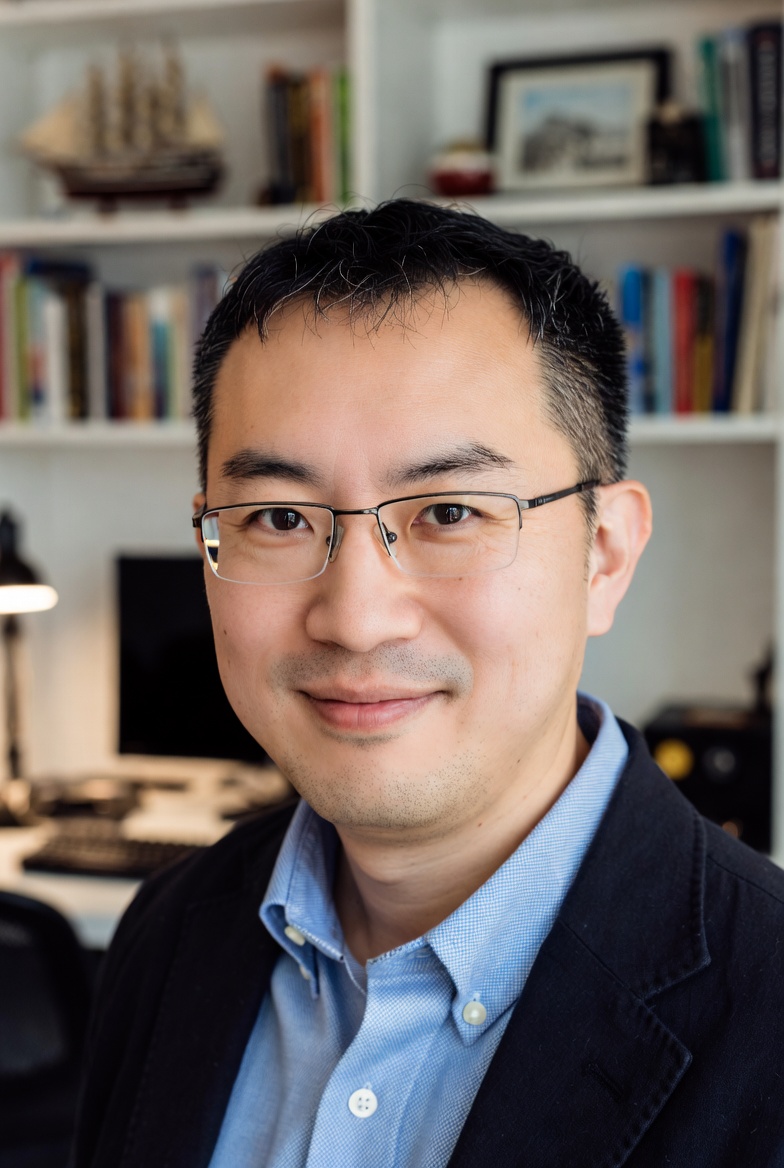
Kevin Liu is a Competitive Programming Specialist & Algorithm Engineer with 8 years of experience specializing in dynamic programming, graph algorithms, and competitive programming. He focuses on practical, production-ready solutions and has worked on projects integrating algorithmic rigor with engineering constraints. In recent years Kevin has been actively transitioning his algorithm engineering expertise into quantum computing: he has prototyped hybrid quantum-classical algorithms and Qiskit-based experiments for research and teaching purposes. He contributes to reproducible experiment prototypes and focuses on making algorithmic ideas portable to near-term quantum hardware.