
Introduction
As a Network Security Analyst and Firewall Specialist with over 12 years of experience, I've seen how critical cellular networks are in our daily lives. This immense reliance on cellular technology highlights the importance of understanding its components and infrastructure, which form the backbone of modern connectivity.
In this guide, you'll gain actionable insights into essential cellular components—base stations, mobile switching centers, and user equipment—and how they interact across generations from 2G to 5G. You will also learn practical steps to build network simulations and the tools used for real-world deployments and troubleshooting.
By the end, you'll be ready to engage in projects that require designing, testing, and securing cellular networks, bridging the gap between theoretical knowledge and practical implementation.
Key Components of Cellular Networks
Base Stations and Cells
Base stations, also known as cell sites, are critical for cellular networks. Each base station covers a specific area called a cell. The size of the cell varies with population density and geography: urban cells tend to be micro- or pico-cells, while rural deployments use macro cells. When designing deployments I typically combine drive/walk RF surveys with propagation planning tools (e.g., Atoll, TEMS Investigation) to size cells and adjust antenna downtilt, azimuth, and transmit power.
Cells use radio frequencies to communicate with mobile devices. As a device moves, the network performs a handover to the next cell according to measured signal metrics (RSRP/RSRQ for LTE, SS-RSRP/SS-SINR for 5G NR). If you are new to those metrics, see the Glossary of Terms for beginner-friendly definitions and examples.
Proper placement and parameter tuning reduce dropped calls and improve throughput. In one city-center deployment we used drive-test data and SON (Self-Organizing Network) tuning to shift neighbor lists and adjust power levels, which led to a measurable 30% increase in capacity during peak hours.
- Base stations provide radio coverage and edge processing for RAN functions.
- Cell size and type depend on capacity and coverage needs.
- Handover and neighbor relations keep sessions continuous during mobility.
- RF optimization and SON features reduce dropped calls and improve KPIs.
Quick connectivity check (replace tower_ip_address with a testable host in a lab):
ping -c 10 tower_ip_address
This command checks the response time from your device to the tower or test host. In a lab, point this at a local VM or mock API (see the API & Lab Disclaimer section for a Flask mock example).
| Feature | Description | Example |
|---|---|---|
| Base Station | Provides signal coverage | Urban areas use small cells |
| Frequency Band | Designated radio frequencies | LTE commonly uses 700 MHz–2600 MHz bands |
| Handover | Maintains call connection | Seamless transitions between cells |
How Cellular Infrastructure Works
Network Architecture
Cellular networks are organized into layers: the Radio Access Network (RAN), which manages radio resources and base station functions, and the Core Network, which handles subscriber services, routing, authentication, and billing. Modern deployments separate control and user planes (CUPS) and increasingly adopt virtualized network functions (VNFs) and cloud-native network functions (CNFs) for scalability.
When we migrated parts of our core to a cloud environment, we containerized control plane functions and used orchestration to scale VNFs. This reduced failover times and improved database access latency from ~300 ms to ~50 ms for critical AAA operations. Practical core components include HSS/UDM for subscriber data, MME/AMF for mobility management, and S-GW/P-GW or UPF for user-plane routing.
In 5G core architectures, additional specialized functions play important roles:
- SMF (Session Management Function): responsible for session and IP address management for user equipment, interacting with the UPF to set up and modify user-plane paths and QoS rules.
- PCF (Policy Control Function): provides centralized policy decisions (e.g., QoS, charging rules) and exposes policy APIs used by AMF/SMF to enforce per-session behavior.
These 5G core functions complement the components already familiar from 4G (HSS/UDM, AMF/MME, UPF) and enable finer-grained session control, slicing, and policy-driven routing when combined with edge compute and orchestration frameworks.
- Network layers include RAN and core with clear control/user plane separation.
- RAN manages radio scheduling, link adaptation, and handovers.
- Core handles subscriber authentication, routing, and policy enforcement.
- Virtualization enables elastic scaling and faster rollouts.
Simple operational status check example (placeholder):
curl -X GET http://core_network/api/status
Clarification: the example above is a placeholder. For beginners, do NOT run this against production networks. To practice safely, deploy a local mock API (see the API & Lab Disclaimer) or use an open-source core implementation (research projects such as Open5GS or free5GC) in an isolated lab to expose management endpoints you can query.
| Layer | Function | Example |
|---|---|---|
| RAN | Connects devices to base stations | Handles radio frequencies and link control |
| Core Network | Data routing and service management | Authentication services and policy control |
Cellular Network Security
Security is an integral part of cellular design. Below are practical details on common threats, protections, and operational practices I use when auditing or hardening networks.
Common Threats
- IMSI catchers / fake base stations (Rogue eNodeBs/gNodeBs) used for location tracking and intercepting traffic.
- Signaling-layer attacks (SS7, Diameter) that can enable unauthorized location queries or message interception if exposed to untrusted networks.
- Interception and tampering of backhaul links if not encrypted.
Authentication & Encryption (simplified)
Authentication and encryption evolved across generations. Brief, beginner-friendly breakdown:
- GSM (2G): Early ciphers (A5 family) are weak today; GSM lacks mutual authentication in many deployments.
- UMTS/3G: Introduced stronger mutual authentication between SIM and network.
- LTE (4G): Uses SIM-based authentication (EPS-AKA). Encryption and integrity are applied to user and control planes; common cipher families include AES-based algorithms (see glossary for EEA1/EEA2/EEA3 explanations).
- 5G: Adds 5G-AKA and EAP-AKA' options and protects subscriber identities by using SUCI to conceal the permanent identifier (SUPI).
EPS-AKA provides mutual authentication between the SIM and the network. Encryption algorithms used in the mobile standards come from specified families (some are AES-based, others are different stream ciphers); consult vendor documentation and the glossary for short definitions.
Operational Best Practices
- Restrict signaling interfaces (SS7/Diameter) via signaling firewalls and interconnect filters; avoid exposing them to the public internet.
- Encrypt backhaul and transport using IPsec (ESP) or MACsec where supported; prefer authenticated encryption modes such as AES-GCM when available and rotate keys using PKI-backed processes.
- Harden RAN nodes: limit management-plane access, enforce strict access controls, and apply timely firmware updates from vendors.
- Use IDS/IPS tuned for mobile protocols and monitor GTP and Diameter traffic for anomalous sessions; correlate with control-plane logs for full context.
- Segment network slices and apply per-slice security policies in 5G deployments to avoid lateral movement between slices.
Tools and Troubleshooting Tips
Practical tools I use when investigating or hardening networks:
- Wireshark (GUI) or tshark for protocol-level inspection (GTP, DIAMETER, SIP). Use display filters like
gtpto focus on GTP traffic. Recommended: Wireshark 4.0+ for up-to-date dissectors. - tcpdump for capture: capture GTP-U (user-plane) on UDP port 2152 with:
sudo tcpdump -i eth0 -w gtp_capture.pcap udp port 2152
Open the resulting capture in Wireshark to inspect tunneled traffic. For signaling analysis, capture Diameter/SS7 interfaces and correlate with control-plane logs.
Additional lab and SDR tools (introducing srsRAN):
- srsRAN (successor to srsLTE) — a widely used open-source software radio toolkit for RAN and small-scale test deployments. Use the project repository as a starting point: https://github.com/srsran/srsRAN. srsRAN can run with SDR hardware (for example Ettus USRP) or in simulated modes for protocol learning. Run it in an isolated lab and consult the project docs for the recommended stable release and build instructions.
- Open-source cores like Open5GS or free5GC to provide a local core network for testing; project repositories: https://github.com/open5gs/open5gs and https://github.com/free5gc/free5gc. Combine these with srsRAN to observe full-stack behavior in a safe environment.
- Use Docker or VMs to isolate labs; for Python-based mocks use Flask (Python 3.8+ with Flask 2.x recommended) to simulate management endpoints without touching operator infrastructure.
Operational checks I run during audits:
- Verify that SS7/Diameter peers are whitelisted and behind a signaling firewall or interconnect security device.
- Confirm IPsec tunnels or MACsec links on backhaul and inspect cipher suites; ensure modern AEAD algorithms (for example AES-GCM) are used where possible and disable legacy weak ciphers.
- Run SIM-based authentication tests using test equipment (TEMS, Keysight Nemo) and validate that insecure fallbacks (e.g., downgrades to 2G) are restricted or monitored.
Types of Cellular Technologies
Understanding Cellular Generations (concise)
Cellular technologies have evolved from 1G analog voice to the high-capacity 5G NR we see today. Each generation improved capacity, latency, and services. 4G LTE (deployed broadly since ~2009) introduced all-IP packet-switched architectures with far better throughput and latency than 3G.
GSM vs LTE — Fundamental Differences (simplified)
GSM (2G) and LTE (4G) differ in switching and architecture:
- GSM uses circuit-switched systems for voice and relies on SS7 signaling; optimized for voice and low-rate data.
- LTE is packet-switched, IP-native, designed for data and low latency; LTE uses EPS-AKA and separates control and user planes.
Understanding these differences is important when designing voice fallback, interworking with legacy systems, and planning security controls.
- 1G: Analog voice
- 2G (GSM): Digital voice and SMS, circuit-switched
- 3G: Mobile internet and improved authentication
- 4G (LTE): All-IP, high-speed data, packet-switched
| Generation | Typical Speed / Latency | Typical Use Cases | Distinct Feature |
|---|---|---|---|
| 1G | ~2.4 kbps / high latency | Voice | Analog voice |
| 2G (GSM) | ~50–100 kbps / moderate latency | Voice, SMS, low-rate data (M2M in early forms) | Circuit-switched voice; SS7 signaling |
| 3G | ~0.5–2 Mbps / improved latency | Mobile internet, multimedia | Enhanced authentication vs 2G |
| 4G (LTE) | Up to hundreds of Mbps / tens of ms | High-speed data, video streaming, VoLTE | All-IP architecture, EPS-AKA |
| 5G | Hundreds of Mbps to multi-Gbps / single-digit to low tens of ms (varies) | Ultra-low latency apps, massive IoT, network slicing, edge compute | NR air interface, network slicing, improved identity protection |
The Role of Network Operators
Understanding Network Operators
Network operators manage deployment, maintenance, and optimization of cellular infrastructure. They coordinate tower placements, spectrum allocation, and interconnect agreements. Large operators invest heavily in upgrades to support technologies such as 5G and OpenRAN; those investments influence coverage and experience.
In urban 5G integration projects, collaboration with operators helped identify optimal tower sites and frequency plans. Operators provide tools and datasets—radio maps, user-density heatmaps, and load statistics—that we used alongside drive-test results to produce targeted small-cell placements and neighbor relation updates, which improved service availability across the targeted area.
- Infrastructure planning and maintenance
- Service deployment and customer support
- Network optimization and spectrum management
- Billing, policy control, and regulatory compliance
Regional context matters: operator names and technologies vary by country. The table below lists representative operators from different regions to show variety, not an exhaustive list.
| Operator | Typical Coverage Area | Common Technologies |
|---|---|---|
| Verizon | Large national (US) | 5G, LTE |
| AT&T | Large national (US) | 5G, LTE |
| T-Mobile | Large national (US/Europe presence) | 5G, LTE |
| Vodafone | Pan-European & global partner networks | 5G, LTE |
| Airtel | National (India and parts of Africa) | LTE, expanding 5G |
Future Trends in Cellular Networking
Emerging Technologies and Their Impact
OpenRAN is enabling multi-vendor RAN architectures and greater vendor diversity. Rakuten Mobile is a published example of an operator that has leveraged OpenRAN in production. AI-driven network management is increasingly used for anomaly detection, dynamic resource allocation, and predictive maintenance.
Edge computing complements mobile networks by moving compute closer to users, reducing latency for time-critical applications (industrial control, real-time analytics). Private 4G/5G networks are also becoming common for manufacturing, logistics, and campuses requiring deterministic performance and isolated security domains.
- OpenRAN supports multi-vendor integration and flexibility.
- AI analytics enable dynamic optimization and predictive maintenance.
- Edge computing reduces latency for critical applications.
- Private networks provide dedicated resources for enterprise needs.
For network statistics and telemetry, operators often expose management APIs in lab or operational environments. Example placeholder usage (DO NOT run against production networks):
curl -X GET "https://api.example.com/network_stats" -H "Authorization: Bearer YOUR_TOKEN"
Clarification and guidance: that curl command is a placeholder. Beginners should simulate such APIs in a lab (see the API & Lab Disclaimer for a simple Flask mock) or use open-source core projects in an isolated environment. Monitor KPIs such as RSRP/RSRQ, throughput, and handover success rate to validate changes.
The Role of 6G in Future Networking
Research into 6G explores terahertz bands, tighter terrestrial-satellite integration, and extreme data rates. Commercial timelines remain speculative, but expected themes are increased spectrum diversity, pervasive AI-driven control planes, and tighter integration with cloud/edge resources.
- Potential for terahertz frequency use to increase bandwidth (research stage).
- Closer integration of satellite and terrestrial networks for broader coverage.
- AI and distributed cloud resources to manage diverse connectivity.
Basic public latency check example:
ping -c 4 example.com
Use this for basic connectivity and latency checks to public endpoints in non-production experiments.
API & Lab Disclaimer (How to simulate endpoints)
Beginner note: placeholder management endpoints in examples are not actionable without a target. Do NOT query production operator endpoints. Instead, create a safe lab environment. Two practical options:
- Run an open-source mobile core (e.g., Open5GS or free5GC) in an isolated lab or VM. These projects expose management and control-plane interfaces you can query locally.
- Mock the management API with a simple web service (Flask) on your workstation or VM to practice curl and monitoring commands. This is the fastest safe way to see how status endpoints behave.
Example minimal Flask mock (requires Python 3.8+ and Flask installed). Save as mock_core.py and run in a safe lab environment:
from flask import Flask, jsonify

app = Flask(__name__)

@app.route('/api/status')
def status():
    return jsonify({
        "status": "ok",
        "services": {
            "mme": "running",
            "hss": "running",
            "upf": "running"
        }
    })

@app.route('/network_stats')
def stats():
    return jsonify({
        "rsrp_avg": -95,
        "rsrq_avg": -10,
        "handover_success_rate": 0.987
    })

if __name__ == '__main__':
    app.run(host='127.0.0.1', port=8080)
Query the mock API with:
curl -X GET http://127.0.0.1:8080/api/status
This approach lets you practice parsing JSON, integrating monitoring tooling, and experimenting with alert rules without touching live operator infrastructure.
Glossary of Terms
- RSRP
- Reference Signal Received Power — a measure of received signal strength in LTE/5G. Lower (more negative) means weaker signal; e.g., -80 dBm is stronger than -110 dBm.
- RSRQ
- Reference Signal Received Quality — combines signal strength and interference to indicate link quality. Useful for deciding handovers and capacity planning.
- SS-RSRP / SS-SINR
- Signals used in 5G NR: SS-RSRP is the synchronization signal power; SS-SINR measures signal-to-interference-plus-noise for synchronization signals.
- GTP
- GPRS Tunnelling Protocol — carries user plane traffic (GTP-U) and control plane messages (GTP-C) between RAN and core entities. GTP-U uses UDP port 2152.
- SS7 / Diameter
- Legacy (SS7) and modern (Diameter) signaling protocols used for exchanging control-plane messages between operators and core nodes.
- SNOW 3G
- A stream cipher used historically in mobile encryption. It is one of several cipher families defined by standards; consult vendor docs for enabled ciphers.
- EEA1 / EEA2 / EEA3
- Encryption algorithm families specified for LTE (EEAx); some are AES-based (e.g., EEA2 is AES-CTR in some specs). Vendors expose which are enabled—verify during audits.
- EPS-AKA / 5G-AKA / EAP-AKA'
- SIM-based authentication mechanisms: EPS-AKA for LTE, 5G-AKA and EAP-AKA' are used in modern 5G. These protocols provide mutual authentication between device and network.
Key Takeaways
- Cellular networks combine RAN and core components—base stations, core functions, and user equipment—to provide mobile connectivity.
- GSM uses circuit-switched voice and legacy signaling; LTE is packet-switched and IP-native—understanding this difference is essential for interworking and security decisions.
- Security must be planned across radio, signaling, and transport layers: use strong authentication (EPS-AKA / 5G-AKA), encrypt backhaul, and restrict signaling interfaces.
- Practical optimization relies on RF surveys, drive-testing, SON tools, and telemetry—these reduce dropped calls and improve capacity when applied with data-driven planning.
Frequently Asked Questions
- What is the difference between GSM and LTE?
- GSM (2G) is circuit-switched and optimized for voice with older SS7 signaling; LTE (4G) is packet-switched and IP-native, designed for high-speed data with modern authentication (EPS-AKA). LTE offers lower latency and higher throughput than GSM.
- How can I improve cellular network performance?
- Use a combination of RF planning tools, drive/walk tests, SON features, and core-side optimizations. Techniques include traffic shaping, load balancing across cells, tuning antenna parameters (downtilt/azimuth), and using CDNs for content delivery. Validate changes with KPIs such as RSRP, RSRQ, throughput, and handover success rates.
Conclusion
Cellular networks rely on precise coordination of RAN and core elements, and securing them requires attention across radio, signaling, and transport layers. Practical deployment and optimization combine RF engineering, traffic engineering, and security best practices. Tools such as Atoll, TEMS Investigation, Wireshark (4.0+), and srsRAN (succeeding srsLTE) are commonly used for planning, measurement, and lab-based experiments.
If you want hands-on practice, set up a small lab with open-source tools (OpenBTS or srsRAN) and use drive-test/packet-capture workflows to observe real protocol behavior. Combine that with operator telemetry and iterative tuning to build secure, resilient, and high-performing networks.
Further Reading
Official and reputable sources for deeper study and specifications:
- 3GPP (standards organization) — reference source for 4G/5G specifications and releases.
- GSMA — industry insights, whitepapers, and developer resources.
- Wireshark — protocol analysis tool and documentation.
- srsRAN repository — project root for srsRAN (successor to srsLTE), useful for lab RAN and SDR experiments.
- Open5GS repository — open-source EPC/5GC core suitable for isolated labs.
- free5GC repository — another open-source 5G core implementation for lab testing.
Use these project roots and industry sites to obtain authoritative documentation, downloads, and implementation guidance. Always run experiments in isolated labs and follow vendor security advisories when applying techniques in production environments.
About the Author
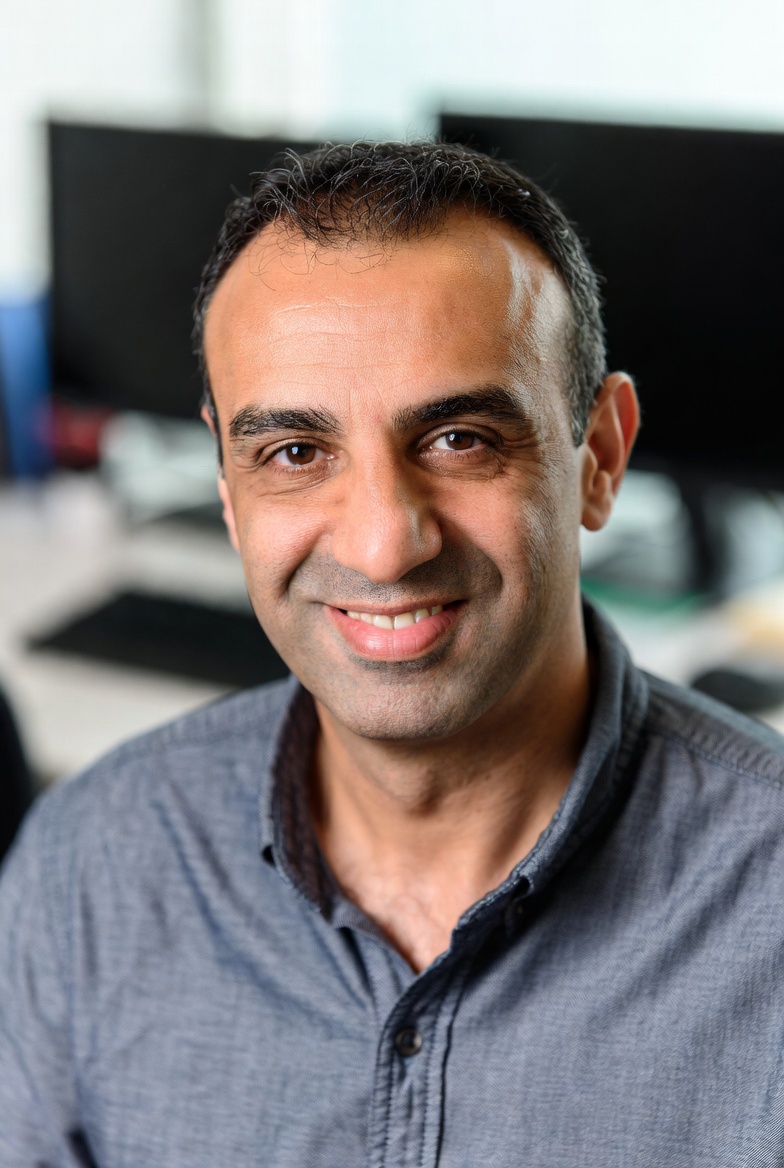
Ahmed Hassan is a Network Security Analyst and Firewall Specialist with 12 years of experience in firewall configuration, IDS/IPS, network monitoring, and threat analysis. He has led RAN and core security audits, containerized core migrations, and hands-on RF optimization projects using tools like TEMS and Atoll.